Chapter 10 HMP Pathway
Pentose phosphate pathway otherwise called Hexose monophosphate (HMP) shunt is pathway that occurs in cytoplasm of all cells in which a small fraction of glucose is oxidized. The HMP pathway does not produce ATP. The function of the pathway is to produce NADPH and Ribose.
The HMP pathway has an oxidative and a non-oxidative pahase. In the oxidative phase of the pathway, glucose is oxidized to the five carbon Ribulose-5 phosphate with decarboxylation and reduction of two NADP+ to NADPH.
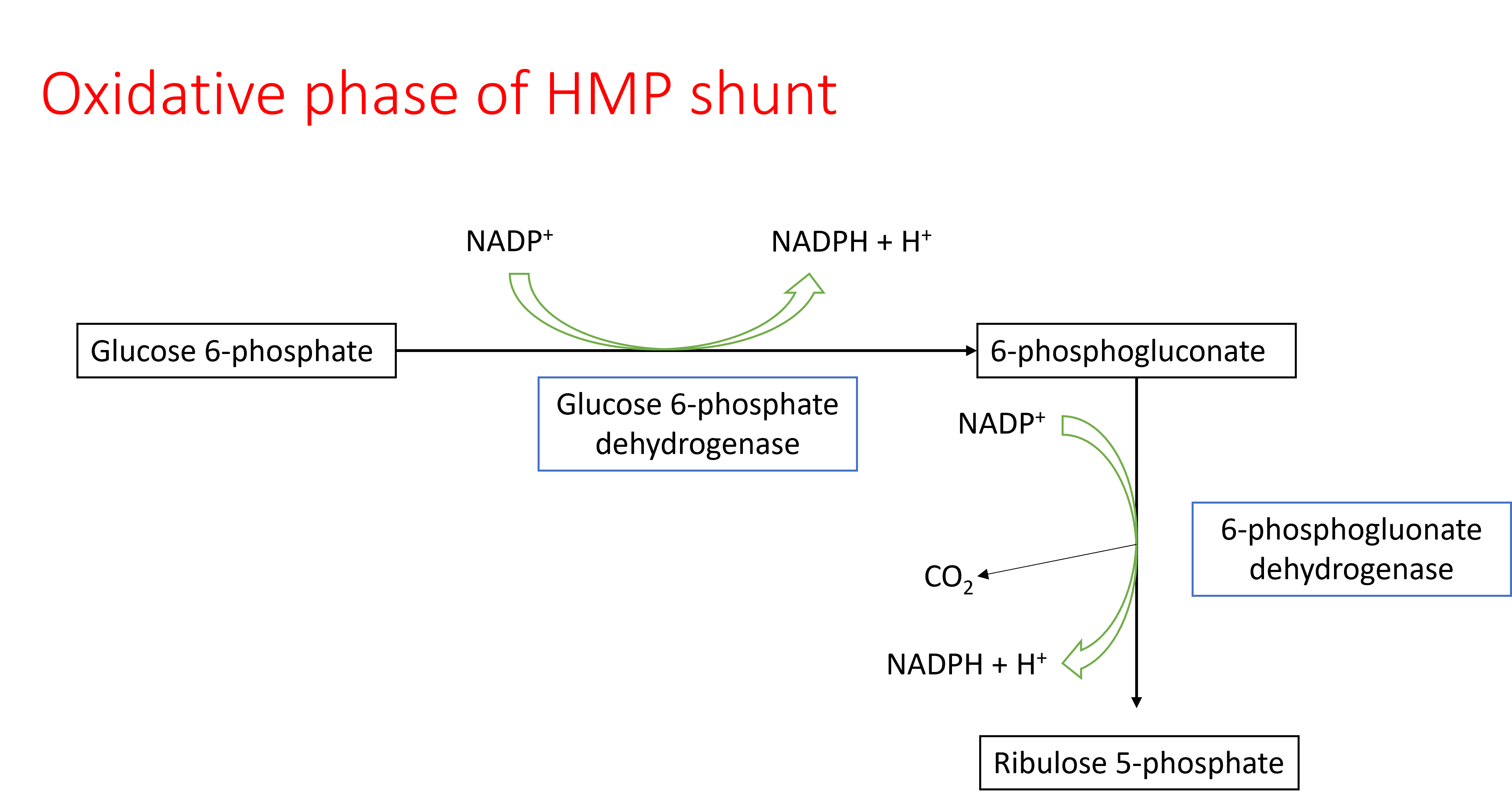
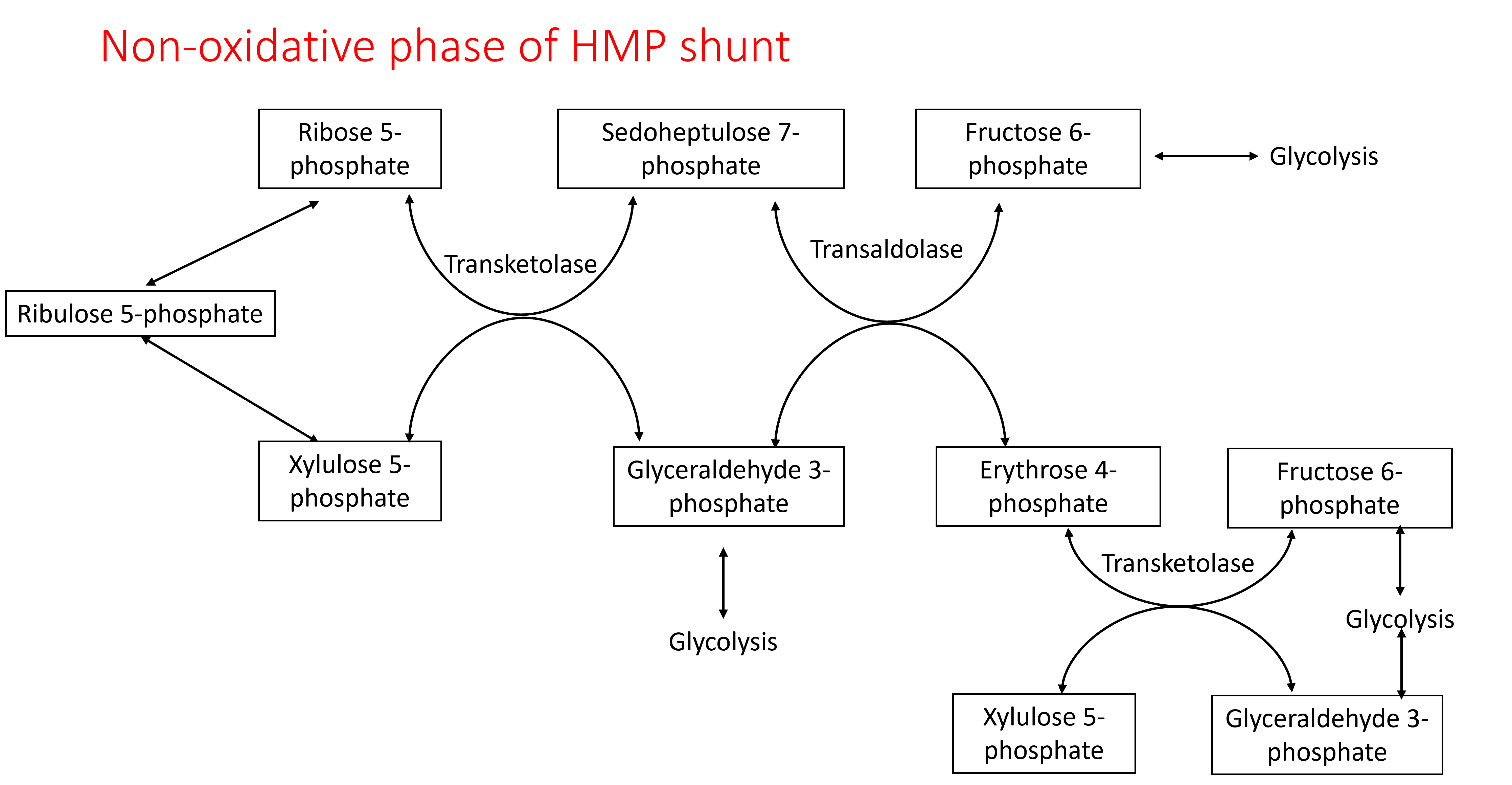
Ribulose-5 phosphate is converted to ribose-5 phosphate and used by cells if required. If ribose-5 phosphate is not required, the non-oxidative phase of the HMP pathway will convert ribulose-5 phosphate into glycolytic intermediates which could be recycled for either glycolysis or more NADPH production in the oxidative phase.
10.1 Importance of the HMP shunt
10.1.2 Functions of NADPH
10.1.2.1 Reductive biosynthesis
Provides electron (reducing agent) during synthesis of:
- Fatty acids
- Cholesterol
- Steroid hormones
10.1.2.2 Reducing hydrogen peroxide
Hydrogen peroxide is a highly reactive oxygen containing molecule that can destroy the contents of the cell by oxidation. Hydrogen peroxide is produced during several physiological processes and due to environmental factors, such as ionizing radiation, pollutants and drugs. Hydrogen peroxide and other such highly reactive oxidants are neutralized by anti-oxidant systems including the Glutathione peroxidase system.
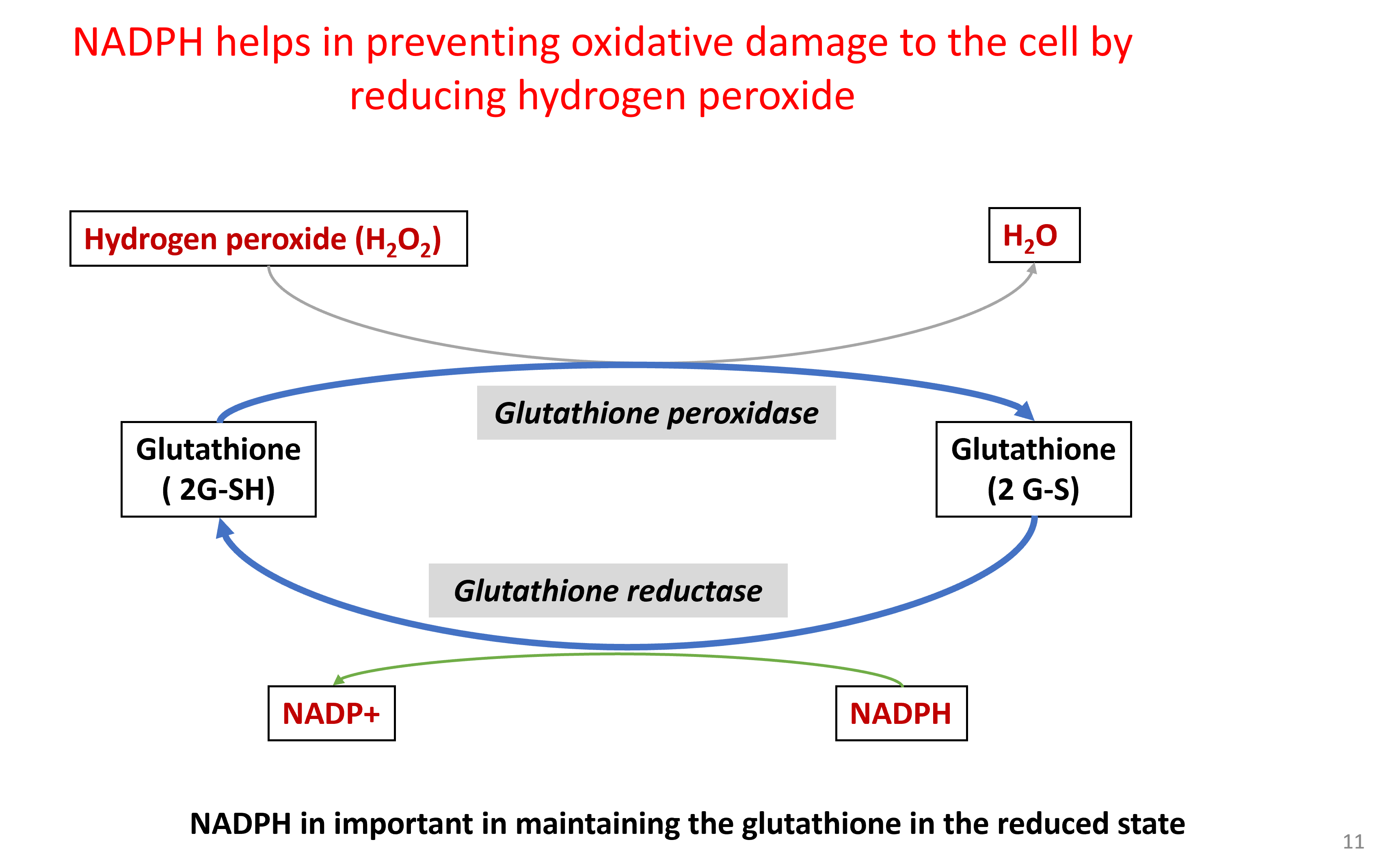
Inability to maintain glutathione in reduced state in RBCs leads to accumulation of peroxides causing damage to the cell membrane. The damage to RBC membrane leads to hemolysis. NADPH prevents this./
10.2 G6PD deficiency
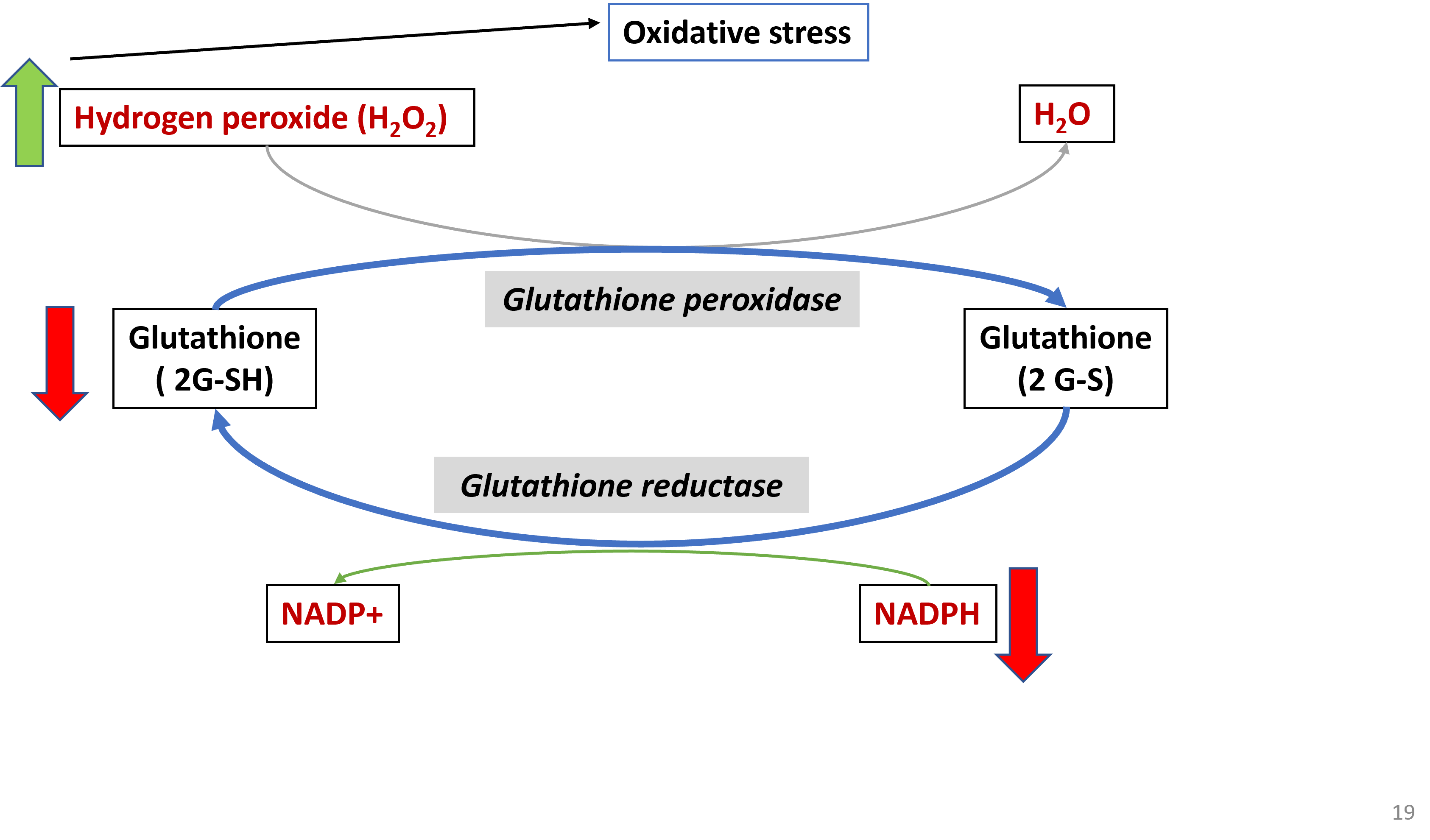
A common genetic disoder in India and other tropical regions of the world, characterised by defect in the enzyme glucose-6-phosphate dehydrogenase which leads to decreased production of NADPH and increased oxidative stress. In particular, RBCs are more susceptible to oxidative stress and hemolysis.
10.2.1 Clinical manifestations of G6PD deficiency
Increased oxidative stress in RBCs destroys the RBC membrane leading to intravascular hemolysis
Increased oxidative stress can be caused by certain drugs (e.g., primaquine), food items (e.g., fava beans), infections
Hemolysis leads to anemia
The end product of heme catabolism is bilirubin and so hemolysis leads to jaundice